
Turning Over a New Maple Leaf


 E-MAIL
 PRINT
PRINT

In a reciprocal accreditation of ambassadors between Canada and Burma a few months ago, Canadian Ambassador to Burma, Ron Hoffmann went to Naypyidaw to meet with Burmese President Thein Sein and other senior leaders of his new government. He also met with pro-democracy leader Aung San Suu Kyi in Rangoon.
Canada has maintained the world's toughest economic sanctions against Burma even after the nominally civilian government came into office in Naypyidaw earlier this year. It has supported the proposed UN Commission of Inquiry into war crimes and crimes against humanity in Burma, and has also long provided humanitarian aid to Burmese refugees and internally displaced persons who have fled war zones along Burma's borders.
The Ambassador explains Canada's current policy toward Burma, including the issue of economic sanctions. Speaking with Aung Zaw, the founder and editor of The Irrawaddy, he also shares his views on the new government in Naypyidaw, the ongoing ethnic conflicts in the country, and Canada's view on Burma's bid to assume the chairmanship of the Association of Southeast Asian Nations in 2014.
Hoffmann has been the Canadian Ambassador to Burma, Thailand, Cambodia and Laos since August 2009. Previously, he was the chief of mission and ambassador of Canada in Afghanistan.
Question: You recently presented your credentials to President Thein Sein in Naypyidaw. What was your message to the president? Did you raise the issues of political prisoners, genuine democratization and ethnic struggle? Could you also share your thoughts on both the criticism and optimism that has been expressed on the president's first 100 days in office?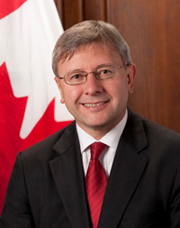
Ambassador Ron Hoffmann
Answer: I presented my credentials to President Thein Sein on July 5. In addition to my discussion with him, I met with the Minister of Foreign Affairs and the Minister for Border Affairs respectively. It was an important opportunity to express Canadian views on the situation in Burma. I reaffirmed Canada's call for the release of all political prisoners and for peaceful dialogue with the political opposition and ethnic groups.
I also expressed Canada's deep concern about the human rights situation. Canada's Minister of Foreign Affairs John Baird, met with his Burmese counterpart on the margins of the Asean Regional Forum in Bali last month and he raised these issues and underscored the importance that Canada attaches to the Burmese government's responsibility to ensure Aung San Suu Kyi's personal security and freedom of movement.
You're right that there are varying views on the Burmese government's track record since it was formed in March, and some call for more patience before criticizing it after some 100 days in office. We noted that President Thein Sein made some welcome commitments in his inauguration speech, and the new government has even been self-critical in discussions with the international community. This is positive, but only to a point. Canada is deeply concerned that the conflict in some ethnic areas has intensified, and that there are credible reports of increased incidents of rape by government soldiers and the continued use of forced labour.
Canada also finds it profoundly disappointing that there has been only negligible progress in releasing political prisoners. Although the new government may need time to reform and advance certain changes in their system, especially in terms of economic and social policies, there are some problems which could be addressed much more quickly to prove their commitment to reform. Minister Baird put it succinctly when he stated that we are looking for progress in Burma, not just words.
Q: Canada is actively involved in helping Burma, both through aid delivered directly to the country and through assistance to projects along the border.
1 | 2 | 3 next page »
 COMMENTS (0)
- Turning Tourism Awareness into Action
- Soldiers of Mixed Fortunes
- Exclusive Interview with KIA Vice-Chief of Staff
- 'We Have to Go For It!'
- Will the Golden Land Have a Silver Lining?
- Nine Years Sleeping on a Cold Concrete Floor
- ‘I Am Not a Bad Monk’
- Ambassador Mitchell's Press Briefing
- Rapporteur on Rights and Reforms
- ‘They Are Fighting Us Like a Foreign Invasion'