
| Friday, August 12, 2011 |
In a reciprocal accreditation of ambassadors between Canada and Burma a few months ago, Canadian Ambassador to Burma, Ron Hoffmann went to Naypyidaw to meet with Burmese President Thein Sein and other senior leaders of his new government. He also met with pro-democracy leader Aung San Suu Kyi in Rangoon.
Canada has maintained the world's toughest economic sanctions against Burma even after the nominally civilian government came into office in Naypyidaw earlier this year. It has supported the proposed UN Commission of Inquiry into war crimes and crimes against humanity in Burma, and has also long provided humanitarian aid to Burmese refugees and internally displaced persons who have fled war zones along Burma's borders.
The Ambassador explains Canada's current policy toward Burma, including the issue of economic sanctions. Speaking with Aung Zaw, the founder and editor of The Irrawaddy, he also shares his views on the new government in Naypyidaw, the ongoing ethnic conflicts in the country, and Canada's view on Burma's bid to assume the chairmanship of the Association of Southeast Asian Nations in 2014.
Hoffmann has been the Canadian Ambassador to Burma, Thailand, Cambodia and Laos since August 2009. Previously, he was the chief of mission and ambassador of Canada in Afghanistan.
Question: You recently presented your credentials to President Thein Sein in Naypyidaw. What was your message to the president? Did you raise the issues of political prisoners, genuine democratization and ethnic struggle? Could you also share your thoughts on both the criticism and optimism that has been expressed on the president's first 100 days in office?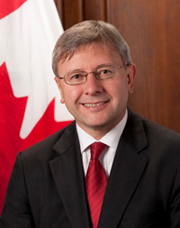
Ambassador Ron Hoffmann
Answer: I presented my credentials to President Thein Sein on July 5. In addition to my discussion with him, I met with the Minister of Foreign Affairs and the Minister for Border Affairs respectively. It was an important opportunity to express Canadian views on the situation in Burma. I reaffirmed Canada's call for the release of all political prisoners and for peaceful dialogue with the political opposition and ethnic groups.
I also expressed Canada's deep concern about the human rights situation. Canada's Minister of Foreign Affairs John Baird, met with his Burmese counterpart on the margins of the Asean Regional Forum in Bali last month and he raised these issues and underscored the importance that Canada attaches to the Burmese government's responsibility to ensure Aung San Suu Kyi's personal security and freedom of movement.
You're right that there are varying views on the Burmese government's track record since it was formed in March, and some call for more patience before criticizing it after some 100 days in office. We noted that President Thein Sein made some welcome commitments in his inauguration speech, and the new government has even been self-critical in discussions with the international community. This is positive, but only to a point. Canada is deeply concerned that the conflict in some ethnic areas has intensified, and that there are credible reports of increased incidents of rape by government soldiers and the continued use of forced labour.
Canada also finds it profoundly disappointing that there has been only negligible progress in releasing political prisoners. Although the new government may need time to reform and advance certain changes in their system, especially in terms of economic and social policies, there are some problems which could be addressed much more quickly to prove their commitment to reform. Minister Baird put it succinctly when he stated that we are looking for progress in Burma, not just words.
Q: Canada is actively involved in helping Burma, both through aid delivered directly to the country and through assistance to projects along the border. Could you tell us about the humanitarian needs on the border and the support Canada has been providing there? What are your views on the recent cutback in funding to border-based groups by some countries? And what do you think about the situation along the Chinese border where NGOs have been denied permission to deliver medicine and other assistance to refugees displaced by recent conflict in northern Burma?
A: Existing Canadian policy allows for humanitarian aid inside the country, and I'm pleased that Canada has stepped up contributions in response to UN and NGO appeals in recent months, including a US $500,000 contribution to relief efforts following Cyclone Giri last fall. The core of our funding support, however, continues to be to refugees along the borders. In fact, last year Canada renewed a $15.9 million five-year support program, concentrating on much needed food aid as well as health services.
Events of recent months illustrate the continued and even growing need for such programming. I sincerely hope that other traditional donors and new partners continue to contribute to the acute needs which are still present on the border.
As for the China border, Canada calls on all parties in a position to help those displaced or harmed by conflict to help ensure that aid makes its way to victims and that refuge from violence and persecution can be found when needed.
Q: There has been little condemnation from the international community, including Burma's neighbors and Western governments, of the Burmese army's increasing violence in predominantly ethnic areas in Karen, Shan and Kachin states. Some Burmese say that the international community has been too quiet on these conflicts and the ongoing human rights violations inside the country. What is Canada's response to the current conflict and human rights situation in Burma?
A:.The current situation in these regions is a matter of serious concern, and the credible reports of increased human rights violations that we have seen are deeply troubling. We need all countries that have relations with Burma to express their concern and use whatever leverage they can muster to urge greater respect for basic human rights in the country.
Asean members, and others who engage in trade and investment, should, in particular, use their influence to protest what we are hearing about. Canada will continue to be a strong voice for those who are oppressed, and we will always advocate for our core Canadian values like democracy, human rights, and the rule of law.
We continue to call on the government to promptly investigate all allegations of human rights abuses by government or military personnel. Because of our ongoing concerns about human rights in the country, we believe economic sanctions are still merited.
Q: Canadian Foreign Minister John Baird recently told Asean leaders in Jakarta that Canada has started limited engagement with the new Burmese government, with a focus on human rights. What will this new approach entail in practical terms?
A: It’s not entirely a new approach, as Canada has had long-standing diplomatic relations with Burma. In addition to enabling us to communicate our views directly and clearly to the new government, our engagement will allow us to see conditions on the ground first-hand and to establish relationships with a wide range of civil society representatives, humanitarian workers and the parliamentary and non-parliamentary opposition, including Aung San Suu Kyi.
I think Minister John Baird's close personal involvement, including setting up a bilateral meeting with Burma’s foreign minister, is testimony to the government of Canada's values-based foreign policy and commitment to human rights.
Canada will always advocate for freedom, democracy, human rights and the rule of law.
Q: What is Canada's position on Burma's bid to assume the Asean chairmanship in 2014? What benchmarks do you think should be met before Burma is allowed to take this important regional position?
A: Canada recognizes that the decision on who chairs Asean rests with Asean members themselves. However, as a close friend and formal dialogue partner with Asean since 1977, Canada recommends that Asean members consider how to capitalize on this important opportunity to achieve real improvements in Burma's behavior.
Benchmarks could include a wide range of matters, but among them should be the release of all political prisoners and a peaceful dialogue with ethnic groups on a new political road-map for managing the country's ethnic diversity. These are achievable goals in the short term, and Burma should know that there is a cost to not taking them seriously.
Q: Aung San Suu Kyi is planning to start her first political tours of Burma since her release from house arrest last November, and the Burmese government has warned her of the chaos and dangers that could ensue if she goes ahead with her plans. Do you have any message to the Burmese government concerning Suu Kyi's security and her right to travel around Burma in her capacity as leader of the National League for Democracy?
A: Aung San Suu Kyi was granted honorary Canadian citizenship by the parliament of Canada in 2007. I had the pleasure of meeting with her recently to pass on the honorary degrees she has received from Carleton and Memorial Universities, and to reiterate Canada's support for her ongoing work in promoting democracy and human rights in Burma.
Canada has unambiguously stressed to Burmese authorities the importance of Aung San Suu Kyi's freedom. Minister John Baird raised this issue in Bali and I did so in Naypyidaw. We acknowledge the important assurances we were given by the government of Burma in this regard, as well as their acceptance to allow her to travel in the country and increase her public activities in Yangon. Her freedom of mobility is fundamental to Burma's pledge to reform. And we will continue to press to ensure this is granted.
Q: There has been a major push to form a proposed UN Commission of Inquiry into war crimes and crimes against humanity in Burma, and Canada is among those who have supported this idea. But how strong is Canada's desire to implement this proposal together with other democratic countries? What effect do you think this will have on the regime's willingness to undertake serious reforms?
A: Canada holds the view that there should be accountability for serious human rights abuses. We hope the prospect of a Commission of Inquiry might reinforce that our appeals for improved conduct are not empty, and that the country's leaders, including an emerging generation of top officials, understand that their decisions may have serious consequences for them personally.
How and when a Commission of Inquiry might practically move forward is a matter of active discussion among countries of like-minded values, and there are admittedly some uncertainties. What's key for Burmese leaders and senior officials to understand, however, is that there remains a very real prospect that their actions today may come back to haunt to them. The best way to avoid that is to take seriously the calls for better treatment of their own population.
Q: There have been increasing calls to fine-tune sanctions on Burma. Do you think that targeted sanctions will be a more effective tool for encouraging political change in Burma? Do you think that concerns about China's growing clout in Burma and its massive investment in the country's energy and mining sectors justify the desire of some Western governments to modify sanctions in order to allow invest in Burma?
A: I can't speak for other countries, but I can say that the government of Canada is committed to keeping our comprehensive economic sanctions—which are the toughest in the world—in place until there is a tangible and enduring change in the Burmese government's actions. I prefer to see this not as a threat, but as an opportunity.
Canada is ready to acknowledge and reward meaningful progress, but much still needs to be done in concrete terms to reach that point. For the benefit of all concerned, I sincerely look forward to seeing that day. When that happens is really up to the leaders of Burma.