Adrian Zaw, a Burmese-American whose given name is Kyi Maung Zaw, plays a main character in a short film called “Burmese Refugee” that was shot by Chapman University in California. Zaw has produced 40 movies for television channels under the name of his entertainment company," Arrow Entertainment." The Resistance Series, a web series in which he plays a main character, aired on the SyFy Channel in 2010. He was awarded an Emmy for the Outstanding Broadband Drama of 2007 for his role in the web series project titled "Satacracy 88." Zaw's family moved to the US in 1989 when he was five years old. He studied the dramatic arts and speech and debate at Pasadena City College and attended the University of Southern California (USC) before dropping out in his final year to start his career.
The Irrawaddy reporter Nayee Lin Latt spoke with Zaw about his role in “Burmese Refugee,” which premiers April 30, and his flourishing life as an actor, director and producer in Hollywood.
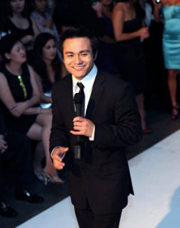 |
| Adrian Zaw (aka Kyi Maung Zaw) |
Question: How many movies, including short films, have you directed or acted in so far?
Answer: It could be over 100, including short films.
Q: What sort of character do you like to play the most?
A: I have been cast as almost every type of character—for instance as a slave or a gang leader. I really wanted to play a main character in a movie about Burma. The current project, "Burmese Refugee," is my first acting in this kind of film.
A small problem I am facing for the time being is that I can't speak Burmese fluently. I want to reach out to more filmmakers in Burma. It would be great if we could shoot films that combine the film businesses in Burma and America. Even though I have shot many films, I've never done a movie about Burma yet.
Q: Why did you choose to act in "Burmese Refugee"?
A: Professors from Chapman University chose me after looking into my background—where I came from, who my parents are, what we did, etc.
Q: What have you learned about Burmese refugees from playing such a character?
A: In the film, my character is in the US but his family is left behind in a refugee camp. He works hard to bring his family to America. Because of the language barrier, he can't work in the profession he used to perform in Burma. Instead, he works as a casual laborer—cleaning dishes, etc. Actually, it is quite reflective of my family's first years of resettlement in the US. My father is a medical doctor, a Rangoon native. He used to run a clinic in Mogok. We moved to Thailand after the 1988 uprising and then to America. So I really did not have any problem with the character.
Q: What would you do with respect to movies if you had a chance to visit Burma?
A: I want to lend my expertise and share my knowledge with the people of Burma. I think I can give them advice not only about acting, but also about editing and producing in terms of upgrading quality. I really want to see quality improvement in the Burmese movie industry. Then we can earn some recognition in international film markets.
Q: What is your opinion of Burmese movies?
A: I think the quality is very poor, especially if you compare them with movies produced here in the US. Perhaps it is acceptable to the Burmese audience, but for our eyes, the quality is really poor. For instance, the position techniques of the camera operators and the actors determine the quality of a movie. That is a very important step in making a film. Then you can think about the other necessary steps needed to attract the audience’s attention.
I have also made some bad movies out of the over 100 movies that I have shot. I learned from them and tried to make each one better.
Q: Do you think you can make movies freely if you are in contact with a Burmese director?
A: It depends.



 E-MAIL
 PRINT
PRINT

 COMMENTS (12)

