
The Odyssey of Saw Kayti


 E-MAIL
 PRINT
PRINT

After more than 13 years detained in prisons in Kolkata and Port Blair, 31 of the 34 Burmese rebels were freed on May 19. The remaining three face further questioning and investigation in Port Blair.
One of the released, Karen National Union (KNU) member Saw Kayti, spoke to The Irrawaddy recently about their arduous journey to the Andaman Islands where they were captured by the Indian Navy and sentenced to life imprisonment on terrorism-related charges.
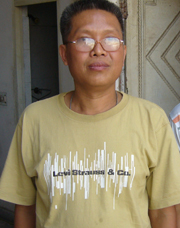 |
| Saw Kayti |
Answer: one day, he came and told me we have to do a joint operation at sea with the army of the National United Party of Arakan (NUPA) led by Khine Yarzar. I had to go along as I can speak Thai well, and I could help in communicating with the boatmen. He did not tell me details. He popped up one day while I was taking care of my sick father and said it was time to go. That was in October 1997.
From there, Padoh Moo Lwae, Cha Lwae and I arrived in Kanchanaburi [a city in western Thailand] and went to Ranong [a Thai town on the Burmese border]. Our other comrades arrived later. From there, we crossed the sea to a small island named Myauk Nyo where our Battalion 11 was located. We met with Soe Naing and four or five soldiers from the Arakanese army.
At that time, we did not know that we’d have to go to India. In February 1998, Khine Yarzar met us there. My brother said Khine Yarzar, who was in contact with the Indian intelligence services, had been promised an island in India. There, we could launch coordinated Arakan-Karen operations against the Burmese government and train recruits. Khine Yarzar later went back to Arakan. That's all I knew about it.
The journey was tough. On February 9, 1998, we reached Narcondam Island. At the time, we didn't even know the name of the island we had reached. We found out later while we were detained.
Q: How did you manage to make contact with the Indians?
A: We spent one night near Narcondam Island, and made contact with them next morning.
First, Khine Yarzar, Padoh Moo Lwae and some privates went into the bay. We had to wait on the boat until we got the message that we could come in. In the evening around 4, we reached Landfall Island. We found out Landfall Island’s name later in detention. It was in Indian territory—a lot of big islands. The views were very pleasant. I didn't disembark onto the island. I just stayed in the boat.
Q: Where did you meet Indian Lieutenant Colonel Grewal?
A: As soon as we reached Landfall Island, Grewal came to meet with Khine Yarzar. Khine Yarzar introduced him to all of us. He spoke Burmese very well. He asked me if I wanted to go to Arakan. I replied that I didn't know yet, and he asked me to fish for his soldiers. I asked the Thai helmsman where to find fish; however he replied he couldn't do that at the time. On next day, the helmsman found a place to fish. At any rate, Grewal said it was okay and went onshore.
Q: Do you have any idea of the discussion on the shore with Grewal and your leaders?
A: No, I didn't know as I was not there. I was just an underling. The Arakan soldiers also don't know. I never saw Khine Yarzar again after he went onshore with Grewal.
Q: When did the Indian Army arrest all of you?
A: I was sleeping on the boat that night. I didn't see the other boats. As the sun rose, it was February 11, I saw one navy ship in the distance. Around five minutes later, I heard from my wireless radio saying clearly in Burmese: “What is that in the front, what it is? Report, if there is anything strange!” I then thought we must be in Burmese waters or I would not have heard Burmese words. On our boat, there was a fisherman from Burma who worked in Burmese army for many years. He told us that these words are used in the army, not by civilians.
1 | 2 | 3 next page »
 COMMENTS (1)
|
||
|
||
 |
- Turning Tourism Awareness into Action
- Soldiers of Mixed Fortunes
- Exclusive Interview with KIA Vice-Chief of Staff
- 'We Have to Go For It!'
- Will the Golden Land Have a Silver Lining?
- Nine Years Sleeping on a Cold Concrete Floor
- ‘I Am Not a Bad Monk’
- Ambassador Mitchell's Press Briefing
- Rapporteur on Rights and Reforms
- ‘They Are Fighting Us Like a Foreign Invasion'