
“Music is in My Blood”


 E-MAIL
 PRINT
PRINT

Zeya Thaw is one of Burma's best-known hip-hop musicians. His band ACID is credited with bringing this hard-hitting musical genre to a country where creative edginess can still get artists into a lot of trouble.
He is also the founder Generation Wave (GW), an underground movement that seeks to use music to raise the political awareness of young people. GW was formed under Zeya Thaw's leadership during the short-lived Saffron Revolution of September 2007, and produces music critical of the ruling regime.
Until a little over a week ago, Zeya Thaw was also one of Burma's more than 2,000 political prisoners. In 2008, he was sentenced to six years in prison for unlawful association and violating the foreign exchange act. His sentence was later reduced by two years, and he was due to be released within a few months when an amnesty declared by President Thein Sein shortened his time behind bars even further.
Irrawaddy reporter Ko Htwe spoke to Zeya Thaw shortly after his release and discussed his life as a political prisoner and his plans for the future.
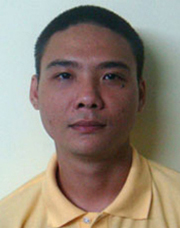 |
| Zeya Thaw |
Answer: once you get involved in politics in our country, you have a 90 percent probability of ending up behind bars. I took this into consideration before I decided to take part in politics, so I don't feel sorry for myself. In fact, I feel honored.
Q: Why did you decide to get involved in politics?
A: As an artist, I am always in touch with people and their feelings. Their hardships and sufferings always touch my heart. That's why I tried to give voice to their feelings.
Q: Can you please tell us about your arrest?
A: I was with five other people in a restaurant, having a meal, when Military Security Unit agents came in and arrested me.
Q: We heard that you were tortured at the interrogation center. Can you tell us more about how you were treated?
A: I was taken to the nearest police station—the Bahan Township Police Station. Then, in the evening, I was blindfolded and taken to another, unknown location. During the interrogation, there was some bloodshed.
I don’t bear any grudges against them. I don't hate them. I am saying this because it was the direct result of a bad system. Because of the existence of this bad system, we have two sides. I am on one side, opposing the bad side. But the agents who interrogated me were defending that side. If we can get rid of that bad system, we will not have either side. I am therefore talking about that unjust system. I want to be crystal clear that what I am saying is not based on any grudge.
Q: Can you describe more specifically what they did to you?
A: I don’t want to go into the details, because people might think that I am bearing a grudge. So it's better not to talk about it in detail. As I said, there was bloodshed. That should be enough, I think.
Q: How many days were you interrogated?
A: Each of us was put into a cell alone under a dim light bulb, so we really lost our sense of time. Later, after coming out of the interrogation cells, we shared our different experiences with each other. We talked about the length of our stay in the interrogation cells, and the degree of interrogation. I can't speak for the others. They should talk about it themselves. After the interrogation period, I was taken to the Insein Prison, where I received my verdict. Then I was transferred to Kawthaung Prison.
Q: Did you meet any other political prisoners in Kawthaung Prison?
A: Ko Pyone Cho, one of the leaders of the 88 Generation students group, was the only political prisoner in Kawthaung Prison when I arrived there.
1 | 2 next page »
 COMMENTS (4)
|
||
|
||
 |
|
||
|
||
 |
|
||
|
||
|
|
||
|
||
|
- Turning Tourism Awareness into Action
- Soldiers of Mixed Fortunes
- Exclusive Interview with KIA Vice-Chief of Staff
- 'We Have to Go For It!'
- Will the Golden Land Have a Silver Lining?
- Nine Years Sleeping on a Cold Concrete Floor
- ‘I Am Not a Bad Monk’
- Ambassador Mitchell's Press Briefing
- Rapporteur on Rights and Reforms
- ‘They Are Fighting Us Like a Foreign Invasion'